SPECIALIZED PROGRAMS

Dynamic Movement Intervention (DMI)

Using targeted exercises to help children actively develop new motor skills, improve postural control, and turn meaningful milestones into lasting progress.

A pediatric therapist supporting a young child in a green shirt through a dynamic movement challenge.
The Approach

What Makes DMI Different?

DMI is an evidence-informed therapy technique that uses specific exercises to help children develop and improve gross motor skills. DMI can be adapted to each child’s individual abilities.

Encourages Active Learning

Rather than being moved through a task, children are challenged to actively discover and develop new movement strategies.

Builds a Strong Foundation

DMI develops postural control, balance, and coordination—the foundation for more advanced motor skills.

Promotes Functional Skills

Exercises are intentionally designed to build movement skills that carry over into everyday activities.

Supports Motor Learning

Purposeful repetition gives the nervous system opportunities to practice, refine, and strengthen new movement patterns.

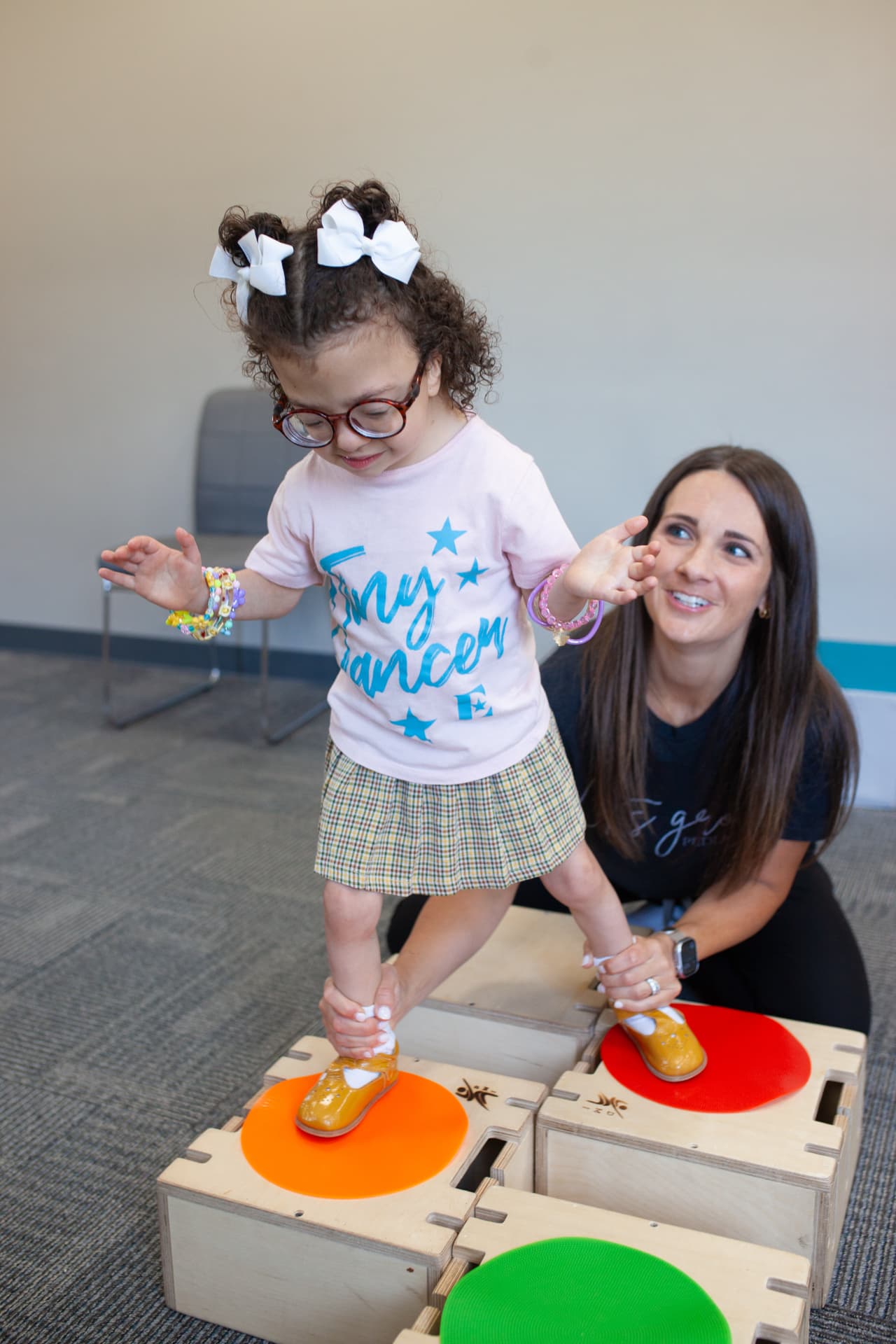
A pediatric therapist supports a young child with white bows as she stands on colorful DMI stepping platforms.
Challenging by Design

What Does a DMI Session Look Like?

At first glance, a DMI session can look challenging—and sometimes it is. We believe children are capable of more than they realize.

One thing that makes DMI unique is that we don't always begin with the easiest skill. We may challenge a child who isn't yet sitting independently with standing exercises, because building strength and postural control at a higher level can support the skills that come before it.

Some children laugh through every session, while others cry when they're working hard. We balance challenge with trust, pausing when needed to help children regulate before moving forward.

Our goal isn't perfection. It's helping every child discover what they're capable of.

Advanced Training

Meet Our DMI Practitioners

Abby Jones and Sarah Rodden, pediatric physical therapists at Let's Grow Pediatrics.

Abby Jones, PT, DPT, PCS

Qualified to provide official DMI Intensive Therapy programs. Completed advanced training through DMI Intermediate B, the highest level of DMI training currently available.

Sarah Rodden, PT, DPT

Qualified to provide official DMI Intensive Therapy programs. Completed DMI Introductory Level C and is continuing advanced DMI training.

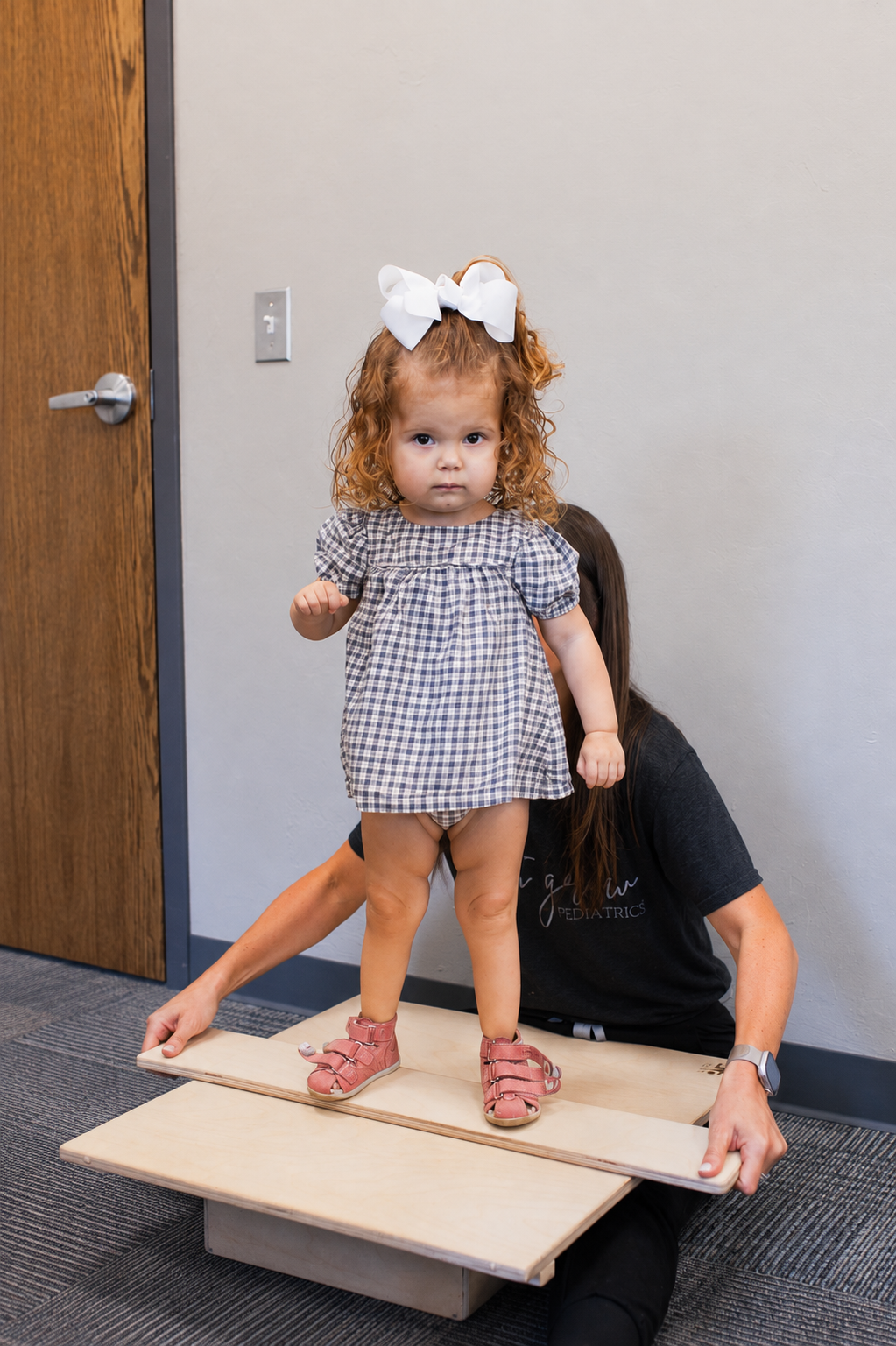
A pediatric therapist supports a young child as they stand on a wooden balance board, focusing on balance and confidence through guided movement.
A Powerful Combination

DMI and Intensive Therapy

We incorporate DMI into most of our intensive therapy programs. The combination of focused therapy sessions, repetition, and individualized treatment gives children meaningful opportunities to build new movement skills, while improving confidence.

Common Questions

Frequently Asked Questions

Will my child cry during a DMI session?

It's possible. DMI challenges children just beyond their current abilities, and learning new movement patterns can sometimes be frustrating. Crying doesn't necessarily mean a child is in pain or having a negative experience.

Our therapists build trust with every child, providing encouragement, support, and breaks as needed. Many parents are surprised to see their child happily return for future sessions, excited to work with their therapist and continue making progress.

Is DMI appropriate for my child's diagnosis?

DMI may benefit children with a variety of developmental, neurological, and genetic conditions. Because every child is unique, we'll determine whether DMI is appropriate through a comprehensive evaluation.

Does DMI hurt?

No. DMI should not be painful. While sessions can be physically challenging and require hard work, our therapists continuously monitor each child's comfort and adjust activities as needed. The goal is to challenge children safely while helping them build strength, confidence, and new movement skills.

How is DMI different from traditional physical therapy?

DMI is the primary treatment approach we use for many of the children we serve at Let's Grow. Rather than simply practicing individual skills, DMI encourages children to actively problem-solve, initiate movement, and participate in every activity.

By challenging children through carefully graded activities, DMI helps build stronger motor connections that improve postural control, balance, coordination, strength, and functional movement. Every child is different, and your therapist will determine whether DMI is the right approach based on your child's unique needs and goals.

Can my child receive DMI during regular therapy sessions?

Yes. DMI can be incorporated into both weekly therapy sessions and intensive therapy programs. Some children benefit from DMI as one component of their ongoing physical therapy, while others make meaningful progress through a focused intensive. Your therapist will recommend the approach that best supports your child's diagnosis, goals, and tolerance.

Helping Children Reach Their Greatest Potential

Wondering if DMI is the right fit for your child? We'd love to help. We'll take the time to get to know your child, answer your questions, and determine whether DMI is the right next step.