
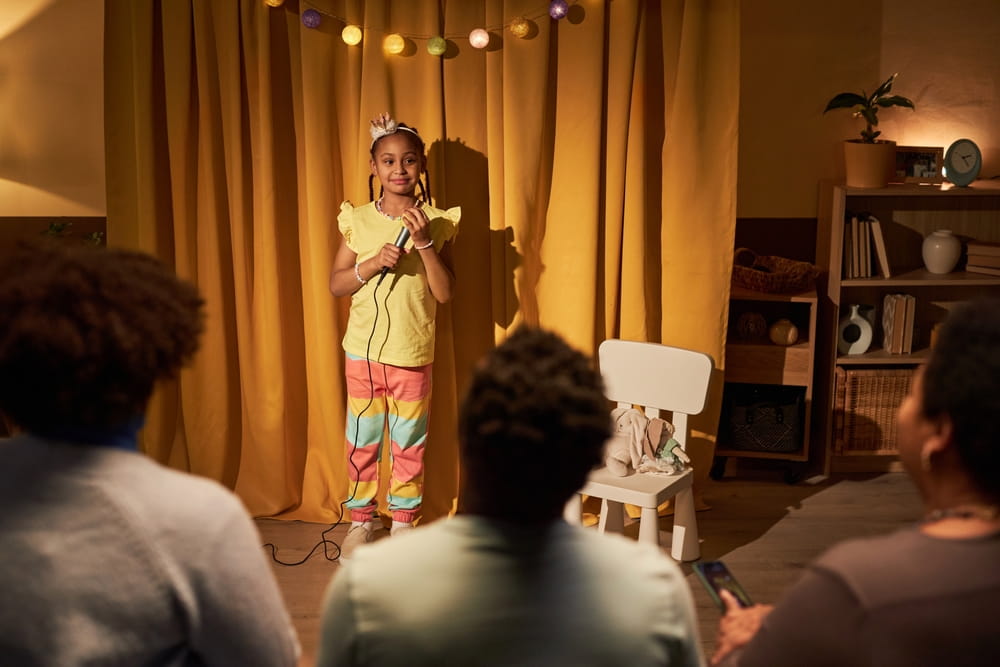
Families in Edmond, OK are always looking for meaningful ways to connect while supporting their children’s growth and confidence. A family talent show is a simple yet powerful activity that allows children to express themselves, practice new skills, and feel celebrated in a supportive environment. At Let’s Grow Pediatrics, confidence-building through play, movement, and creativity is an important part of healthy development, and a talent show can bring all of these elements together in a fun, low-pressure way.
Setting the Stage for a Supportive Experience
The success of a family talent show begins with creating an environment that feels safe, encouraging, and judgment-free. The goal is participation and enjoyment rather than perfection. Letting children know that all talents are welcome helps reduce anxiety and builds excitement. Talents can range from singing and dancing to storytelling, building demonstrations, or simple movement routines.
It can be helpful to frame the event as a celebration of effort and creativity. Children benefit when they feel supported rather than evaluated, which encourages them to try new things. This approach aligns with developmental strategies often emphasized in Early Intervention, where positive reinforcement and play-based experiences support emotional and social growth.
Choosing Talents That Match Interests and Abilities
Encouraging children to choose talents that reflect their interests helps increase engagement and confidence. Some children may gravitate toward performance-based talents like singing or dancing, while others may prefer quieter demonstrations such as drawing, building, or explaining a favorite hobby. Allowing flexibility ensures that every child can participate in a way that feels comfortable.
Movement-based talents can be especially beneficial for building body awareness, balance, and coordination. Simple routines, yoga poses, or obstacle challenges can mirror skills supported through Dynamic Movement Intervention and Occupational Therapy, helping children gain confidence in their physical abilities while having fun.
Planning and Practice Without Pressure
Once talents are chosen, gentle preparation can help children feel ready without creating stress. Short practice sessions work best, focusing on enjoyment rather than repetition. Practicing in front of trusted family members can help children become comfortable being seen and heard, an important step in confidence-building.
Parents and caregivers can model participation by joining the talent show themselves. When children see adults trying new things and laughing at mistakes, it normalizes imperfection and encourages resilience. This shared experience reinforces emotional safety and helps children understand that effort is more important than outcome.
Making the Event Fun and Inclusive
On the day of the talent show, simple details can make the experience feel special without adding cost. A designated performance area, homemade tickets, or a printed program can build excitement. Keeping the audience small and supportive ensures that children feel encouraged rather than overwhelmed.
Consider incorporating group performances to help children who may feel nervous performing alone. Group dances, songs, or movement games encourage teamwork and reduce performance anxiety. These shared activities also support strength, coordination, and social engagement, similar to principles used in Intensive Physical Therapy and movement-based developmental programs.
Celebrating Effort and Building Lasting Confidence
The most important part of a family talent show is how it ends. Celebrating every participant with positive feedback helps reinforce self-esteem and motivation. Rather than ranking performances, focus on highlighting unique strengths such as creativity, bravery, or teamwork.
Small tokens like certificates, stickers, or verbal praise can leave a lasting impression. Over time, experiences like these help children develop confidence that extends beyond the performance itself. By creating opportunities for self-expression and encouragement, families can support emotional growth in ways that align with the child-centered values of Let’s Grow Pediatrics, turning a simple talent show into a meaningful developmental experience.
Sources
American Academy of Pediatrics. (2012). Promoting Children’s Social and Emotional Health. Pediatrics.
Bandura, A. (1997). Self-Efficacy: The Exercise of Control. W. H. Freeman.
Ginsburg, K. R. (2007). The Importance of Play in Promoting Healthy Child Development. Pediatrics.